Agile Lab - Training, Coaching and Consultancy

Wednesday, 30 September 2009

Must Try Harder? Time for That Skywriting Font Again

Whenever I hear supervisors warning workers to pay more attention or to be sure not to forget anything, I cannot help thinking that the workers are being asked to carry out operations as if they possessed divine infallibility.  Rather than that approach, we should recognise that people are, after all, only human and as such, they will, on rare occasions, inadvertently forget things.  It is more effective to incorporate a checklist - i.e., a poke-yoke - into the operation so that if a worker forgets something, the device will signal that fact, thereby preventing defects from occuring.  This, I think, is the quickest road leading to attainment of zero defects.

Posted via email from What Stringer's Reading

David Anderson at #XTC (and the Magical Number Seven)

Great to hear David Anderson speak about Kanban at #xtc. Will be giving the Limited WIP site close attention.

One thing he said that I really did like was that you should try to optimise the process that's already there. You should do this by reducing the work in progress before you start to try to introduce any other changes to the process - like Agile. His idea was that this approach results in much less resistance than wholesale change. As an Agile coach and consultant, I've definitely experienced the resistance, but also there's contradiction implied by trying to change people to an iterative process all-at-once which I think this might address.

One thing that occurred to me - which I'm sure has occurred to many other people was the apparent connection - between limiting work in progress and the "The Magical Number Seven, Plus or Minus Two."

For further information, contact mark@agilelab.co.uk (07736 807 604)

Labels: , ,

Tuesday, 29 September 2009

Seeing the Blubber for the Cows - The Vikings the Inuit

Ways of Making is a piece that I wrote a long time ago, having read in short succession Taiichi Ohno's book on the Toyota Production System and and Jared Diamond's book Collapse.  At the time I was also thinking very intensely about how the internet might change how things got made.  I realise that when I'm talking about "ways of making", I'm also talking about "ways of seeing" which is a very important concept in Lean thinking.

I find this story really, really scary.  And I think it's important to keep reminding myself of it, because it's saying that the way to save yourself can be right there in front of you, and you can still ignore it.  It also just goes to show the powerful desire that we have to carry on doing what we're doing  and how, in the right circumstances, this can be a more powerful desire than survival.


For further information, contact mark@agilelab.co.uk (07736 807 604)

Labels: , , , , , ,

Saturday, 26 September 2009

Men in Bathrooms, Men in Sheds

I was at the London Minibar and I talked to some interesting people, including Sarbjit Singh Bakhshi from UK Trade and Investment who was pushing their LinkedIn group http://bit.ly12MzOb.

While watching the presentations, this song kept drifting through my mind. This was a very bad collection of presentations. I heard an episode of Desert Island Disks once where Sue Lawley interviewed a polar explorer.  This guy went on an expedition, I think walking to the North pole and when he got back, he found - I don't know why he was surprised by this - that walking to the North pole isn't a particularly lucrative activity. Rather he was in debt, in danger of losing his house and still owing the bank thousands and thousands of pounds.  His slightly eccentric way of dealing with his financial problems was to write to Sir John Mills the great actor saying "it's your fault I'm in this mess."  How could his overdraft possibly be John Mills' fault? It was Sir John Mills who had starred in the film "Scott of the Antarctic" that had been this explorer's inspiration when he'd seen the film as a child.

Rather than ignoring the letter, which would have seemed to be an extremely sensible approach, John Mills sent him a reply: "Come round for tea." So the explorer found himself explaining his appalling financial situation while sipping tea and sitting on Sir John Mill's sofa. He explained that he was ruined financially.

"There's only one way out of this mess my boy! You're going to have to talk your way out of it," said Sir John.


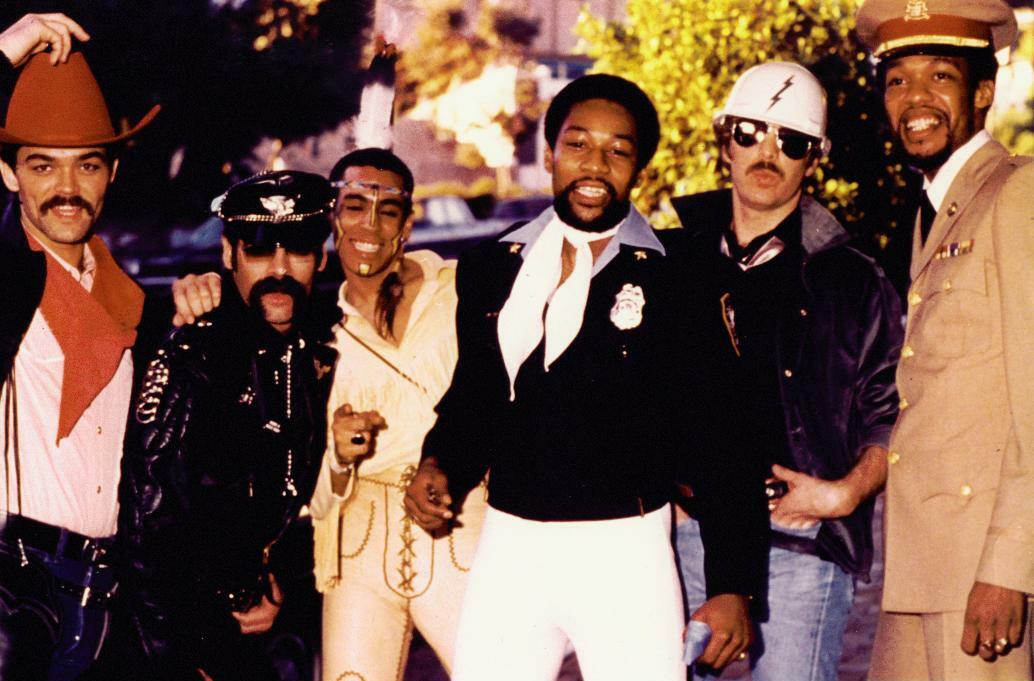
Johnny Darling

"But I can't talk my way out it, the banks don't want to talk to me, they just want to take my house," said the explorer.

"You're not going to be talking to bankers, you're going to be talking to an audience."

So John Mills and the explorer spent the rest of the afternoon in John Mills' bathroom (the acoustics in there made it a good place to practice).  Working up the material and presentational skills he needed to put together an inspirational public speaking business.  And so, finally, I arrive it my point. 

Every presenter I've ever seen at the London Minibar - and at many other events where technology startups present their stuff -

could do with a couple of hours in John Mills' bathroom.


If the UK Government is serious about improving UK Technology's image abroad, one thing they might try is to bring together two fantastic British traditions lone eccentric inventors (men in sheds) and the stage (men who talk for a business and practice in the bathroom).

Three points for possible consideration:


1) Sound.  YOU HAVE TO BE HEARD.  And, nowadays, really, you have to be heard well enough to be heard on the internet. I understand that the devil will always get the best music, but why should a bunch of nerds have the worst sound system?  Dudes you're nerds!  Microphones, amplifiers, mixing desks!  This is techy stuff. Isn't any of this exciting you?  Nobody wants to hear anybody say anything over a circa 1975 village fete tannoy system.  Some options:

  • Get a decent sound system, including radio microphones, amplifiers, mixing desks and some training on how to use all these things.  I don't know much about this myself, but I would love to learn, I would love to know how mic myself up so that every talk I ever gave from now on was of sufficient quality that I could put it up on the net for people to download.  How do you do that? 
  • Teach people how to speak to a crowd rather than shout over it - actually, for the London mini bar this is a much better option because, unless it was very slick and very unobtrusive, I think the professional sounds system would get in the way of the "informal" atmosphere at the London Minibar, although, truth be told, Minibar is now actually just a bit too big.  One thing that really might work is to go promenade theatre style where speakers don't stand on the stage, they either create a circle in the audience and speak in that, or they stand on something, like a soap box.
  • And idea to radically improve the London Minibar.  Each presenter gets to spend a day before the London minibar with a top-class presentation coach, somebody like David Gillespie of The Speechworks at the end of that day, they can deliver a speech about their product and be heard without the need of a PA and without recourse to some of the worst powerpoint presentations in the world.

2) Preparation - OK, whatever product, innovation or business you're pitching, sit down and think about how many hours of work went into developing this product or business.  Now estimate how much time has gone into this presentation that you're about to deliver?  What is that second number as a percentage of the first?  If it's not in double figures you need to do some more work.  I've spent most of my working life around creative scientists and engineers and I know that they have a deep profound distrust of marketing and presentation - that they are somehow dishonest professions.  As a result of this I have seen many supposed marketing presentations in which tens if not hundreds of person years of work is explained using a presentation in which has not had ten hours of thought.  It's a crying shame, it's, literally, a waste of human lives, it needs to be stopped.

3) Dump that disgusting powerpoint crutch.  Do you really want the way the world sees your product to be something like an instruction manual for a 1950's dialysis machine? Right.  So why is there 1000 words of 10 point text on your powerpoint slides?


For further information, contact mark@agilelab.co.uk (07736 807 604)

Labels: , ,

Friday, 18 September 2009

Giving Yourself Some Options - Learned Optimism and the 'And' stance

It's far too easy call people names when they do things that you don't like, and it's very tempting.  There seems to be some kind of instant relief from saying
"He's just a bastard."
"She's just a racist."
"He's only behaving like that because he's very depressed"
"She's psychotic"

In fact, in my experience amateur diagnoses of mental illness are surprisingly common.  As with this casual diagnosis of Obessive Compulsive Disorder in an overheard conversation.

The problem with these labels is not that they aren't accurate – they might be, they might not be, but they aren't very precise.  Dealing with the difficult ways in which people behave in terms of character traits and diagnoses of psychological illness is the broadest of brushes and final and for all time. There is a certain kind of relief that you feel is from not having to think about the detail of the difficult situation now that person you've been arguing with, has been labelled.

This occurs to me having read Martin Seligman's book "Learned Optimism".  Seligman's definition of optimism is quite a technical one which covers some of the common sense concept of what we think of as optimistic, but not everything. Certainly Seligman's definition doesn't cover someone who regarded as "naively optimistic".  Who always imagines things will turn out for the best, irregardless of the evidence.  Rather Seligman's definition of optimism is concerned with the specificity of explanations of bad news.

For Seligman an optimist is someone who, when things go wrong, gives the most specific in time and specific in situation, impersonal answer that she can.

So, for example, if Sue goes to a meeting with her client Jim and before she even gets started on outlining the next steps in the project Jim yells at her, "I've just had about enough of you software people conning me at every turn.  Why can't you just do an honest day's work for an honest day's pay."

The central point of Seligman's book is that there are a variety of ways of dealing with situation and, in terms of what you think to yourself, these are better or worse for mental and physical health and welfare depending on how and to what degree you generalise over time and from situation to situation and to what degree you personalise.

So, for example, if Sue is to say to herself as a result for her conversation with Jim:

"Jim seems to be in a particularly bad mood today. Maybe it's this particular kind of meeting where he has to explain what he wants in technical terms that leaves him exasperated.  His complaints about 'software people' can't really be about me, I've only met him a few times before."

This would be regarded by Seligman as an optimistic response because it is local in time (it's just this time), specific in terms of occasion (it's particularly meetings like this) and it's impersonal to Sue (this isn't something about me, it could have been anybody who got this telling off).

On the other hand, if Sue were to say to herself:

"This is guy is just a nutcase." This is an explanation that's pervasive over time (people who are nutcases today, are generally nutcases tomorrow) and pervasive over several situations (nutcases behave strangely in a wide range of situations).

Or if Sue were to say to herself:

"I must be terrible at my job, I just don't have a professional demeanour.  Clearly there's something about my personality that's made him so angry." This is making it personal.

One of the problems of these kinds of explanation - which Seligman would term as pessimistic - is that they don't leave much room for progress.  If your boss really is mentally ill, or if there really is something about your personality that means people don't treat you with respect, there isn't much you can do about it.

This perhaps why Seligman's view is that, even if you would tend to come up with a pessimistic explanation is such a situation, even if you were to believe it were true, it still pays to try and see the optimistic view, because it gives you more options for action.

The "and" stance

In the field of negotiation and difficult conversations, there's a concept called "The 'and' stance".  It's outlined in Bruce Patton, Douglas Stone and Sheila Heen's book - Difficult Conversations.  The idea is to dispel fears and emotional reactions to situations by accepting that lots of things can be true at the same time.  Have you ever seen a person deny that they've made a mistake, even when it is obvious to everyone who is observing that this person has made a mistake?

Let's say that this person is Ted the Java programmer and that he's in a discussion with his client Clive who's just found a bad bug in Ted's software. Why would this person deny that he's made an obvious mistake?  The study of difficult conversations teaches us that when people's identity is under attack they will react emotionally and defensively, and very probably not rationally.  If it is a strong part of Ted's identity that he is a guru-level java programmer, the reasoning in his head might run like this:

  • I am a guru-level Java programmer
  • Guru level Java programmers don't make mistakes
  • Therefore, if I admit to making this mistake, I will be admitting to NOT being a guru level programmer.

The result of this reasoning is that Ted refused to admit his mistakes.  This causes enormous amounts of difficulty, with clients, with his boss and with the rest of the team.  So much so that they no longer bother to point out his mistakes and fix things without discussing them behind his back.

Of course the truth of the matter is that the world is a very richly complicated and detailed place in which many things are true at the same time.  The approach of the and stance is to try to accept as many claims of the different parties to a difficult conversation at once using the magical word "and".

So, for example, in this case.

"Ted is a highly professional, guru Java programmer." AND "He has made a mistake."  We could perhaps add to this with a few more "Ands" - AND  "A mistake isn't the end of the world" AND "Now we've spotted it, it's easily fixed." 

In my experience, the effect of adopting the "and" stance is to take a great deal of the heat out of a difficult conversation.   Again, as with adopting an optimistic attitude to a situation, using the and stance opens up a set of options for solving the problem.

But remember, difficult conversations are hard.  You're not Chuck Norris - you will get your ass kicked (I got mine thoroughly booted just a couple of days ago).

For further information, contact mark@agilelab.co.uk (07736 807 604)

Labels: , , ,

Thursday, 17 September 2009

An unprecedented opportunity

Recessions are precious things because they shake conventional wisdom, even complacent lean wisdom and motivate managers to make hard choices.

From: Womack and Jones - Lean Thinking

Posted via email from What Stringer's Reading

Mass production logic = #fail

We've been amazed in the years since the launch of Lean Thinking that many firms in the manufacturing world have continued to pursue mass production logic with respect to production location. They have disaggregated their value streams, seeking to place each processing step with significant labor in that global location with lowest wage costs and seemingly locating the processing steps as far apart as possible. The consequence is that many points are optimized but the whole surely is not.

From: Womack and Jones - Lean Thinking


Posted via email from What Stringer's Reading

Doing what we've always done vs delivering value

We are repeatedly struck how the definition of value is skewed everywhere by the power of pre-existing organizations, technologies and un-depreciated assets, along with out-dated thinking about economies of scale.  Managers around the world tend to say ″This product is what we know how to produce using the assets we've already bought, so if customers don't respond we'll adjust the price or add bells and whistles."  What they should be doing is fundamentally re-thinking value from the point of view of the customer.

From: Womack and Jones - Lean Thinking


Posted via email from What Stringer's Reading

Now where's that skywriting font...

Unless the customer and the supplier can learn to remove costly waste from their joint value-creating process, there is an inherent limit on the long-term price-savings available to the customer.  The maximum saving is the amount of margin the supplier can afford to give away over an extended period while still remaining in business.  And this is typically a very small number – only a few percent. - because the great bulk of the suppliers price is determined by real costs resulting from the waste in the value stream.

From: Womack and Jones - Lean Thinking

Posted via email from What Stringer's Reading

Tuesday, 15 September 2009

80/20 rule for Good Enough products

If that 80 percent number rings a bell, it's because of the famous Pareto principle, also know as the 80/20 rule.  And it happens to be a recurring theme  in Good Enough products.  You can think of it this way: 20 percent of the effort, features, or investment often delivers 80 percent of the value to consumers.  that means you can drastically simplify a product or service in order to make it more accessible and still keep 80 percent of what users want - making it Good Enough.

Posted via email from What Stringer's Reading

The MP3 effect

What has happened with the MP3 format and other Good Enough technologies is that the qualities we value have simply changed.  And the change is so profound that the old measures have almost lost their meaning.  Call it the MP3 effect.

Posted via email from What Stringer's Reading

Don't believe the Myth of Quality

"Don't believe the Myth of quality," [Says Clay Shirky] "There comes a point at which improving the thing that was important in the past is a bad move - it's actually feeding competitive advantage to outsiders by not recognising the value of other qualities."

http://www.wired.com/gadgets/miscellaneous/magazine/17-09/ff_goodenough

Posted via email from What Stringer's Reading

Oh yes - this is so true especially for Agile development

The world has sped up, become more connected and a whole lot busier.  As a result, what consumers want from the products and services they buy is fundamentally changing. We now favor flexibility over high fidelity, convenience over features, quick and dirty over slow and polished.  Having it here and now is more important than having it perfect.

http://www.wired.com/gadgets/miscellaneous/magazine/17-09/ff_goodenough

Posted via email from What Stringer's Reading

Actually - I think I'll also add this to the list of library requests...

...just goes to show the power of the Amazon recommender system.

Esther Derby , Diana Larsen , Ken Schwaber -  Agile Retrospectives: Making Good Teams Great 

ISBN-13: 978-0977616640

Posted via email from What Stringer's Reading

Books I'm going to try to get out of the library

These are some books I'm going to try to get out of the library in my continuing investigations of Lean and the Toyota Production System.

Tom Gilb - Software Metrics ISBN-13: 978-0876268551

Mary Poppendieck and Tom Poppendieck  - Lean Software Development - an Agile Toolkit ISBN-13: 978-0321150783

Zero Quality Control: Source Inspection and the Poka-Yoke System  by Shigeo Shingo   ISBN-13: 978-0915299072

Posted via email from What Stringer's Reading

Building the Lean Web Development Team - Course 14th October Watershed Arts Centre, Bristol

This is a discussion and then an outline of the proposed Beta course - "Building the Lean Web Development Team" that I'm going to run at the Watershed Arts Centre in Bristol. As I've pointed out in previous posts, this course is still in development, so I'm offering at the cost of the hire of the hall and lunch - 50 pounds per head.


Waste

One of the central concepts in Lean is waste reduction, but waste can come in many forms. Perhaps some of the forms of waste that don't leap to mind are waste through over-production and waste that results through continual work of resources people - or machines at 100%.

In software, as in car production, a great deal of waste comes from re-work - things that are regarded as finished but which need to be returned for more work to correct errors.

On the web a lot of re-work is generated by "small stuff" discovered the testing function - browser compatibility is the one that comes up again and again - typos, broken links due to move from development to test hosting, adding unexpected text to form fields. I'd like to explore ways that this kind of waste can be reduced.

Value Stream Mapping

One way of looking at a business is an entity that creates value. A very simple scheme for reducing waste is map what the value is that you're providing to your customers and then doing what you can to reduce, or completely eliminate any other activities which do not provide value to the customers.

Another way of improving the value stream is to make sure that value work flows steadily through the organisation with value being added at each stage. Through mapping the stream we can see how it can be reconfigured so that value added at one stage flow directly into the next stage where value is added.

With web development teams, my experience is that there can be problems here with flow of value into and out of the development team, there can be also problems with the timing of adding in design elements and content elements that are not independent from software functionality.

Flow

A central concept in the Toyota Production system is that work is carried out most efficiently if it flows through the team. It follows that this can't be done if every part of the process is running at 100% because, inevitable, the capacity of some parts of the chain will have higher capacity and some other parts of the chain will have lower capacity. The very first thing to do to improve flow through a team is to look at points along the production chain where work is building up.

In web development, this point is often testing. There are several ways of reducing this bottle neck:

* training up the whole team so that they can work in testing when there is work building up there.
* Abandoning testing as a separate function all together and relying on a comprehensive approach to Test Driven Development
* Pulling work through the system only at the rate that the lowest capacity section of the chain can deal with.

Kanban

I'm reluctant to use Japanese words when talking about Lean - as you see I've used very few - because one of my rules is that "Agile is not a license to speak Elvish or Klingon". Kanban simply ways of signalling what work needs doing and also of communicating to the team how they are performing.

Kanban is the system of signals that create flow of value through a team. One way of using a Kanban system is to create "pull" through the team so that work is only initiated when there is capacity further down the stream for it to be dealt with.

Continual Re-skilling

The rate at which required web-related skills change is extremely fast. In my experience with "old fashioned" software development there was a tendency for management to actually try to prevent its staff for from re-skilling (e.g. so that they would be available to work on COBOL projects, ADA projects, I've done them both). Now this would be an extremely dangerous thing to do - for both management and employees.

At the same time, the depth and variety of skills required means that it is very difficult for employees to acquire these skills "in their own time". One of the challenges of applying Lean to Web development is to figure out how to include continual improvement in the skills of the team into the web development process. It may be that this involves allowing some team members to work at less than full capacity (as the requirement for even flow through the process might dictate anyway) and expecting that the team members fill this time with re-skilling activities.

What is it?

One way of thinking about Taiichi Ohno - the inventor of the Toyota Production System - is that he was someone who really knew what a car factory was, what it was supposed to do, and how to make it do those things better. I'm not sure anybody knows what a web development team is (if there's only one kind of thing), what it's supposed to do, and how to make it better. I think this is really good news in some sense because people who can work this stuff out will be in a very competitive position - as are Toyota.

One of the areas we discussed here was that everybody I talked to in web development either doesn't know which bits make money, or knows that it is the bits other than bespoke web development.

Structure of "Building the Lean Web Development Team"


Session 1

Run through Lean Concepts

* Brief History of Lean and the Toyota Production System
* Value Streams, Waste and Flow
* How does Lean relate to web development

Session 2

Approaches to identifying the Value stream

Value stream mapping exercise

Session 3

Examples of Kanban use, in and out of software development

Benefits of Flow

Flow and Kanban exercise

Session 4

Open discussion

* Possible problems with adoption
* identification of next steps


For further information, contact mark.stringer@gmail.com (07736 807 604)

Labels: , , ,

Saturday, 12 September 2009

Scramble, Scramble, Scramble

This is a game I've just made up after reading this: Bruce Tuckman - Developmental Sequence in small groups. 
The game is called scramble scramble scramble (apologies for the military metaphor - let me know if you can think of a better one) and it goes like this:
The claxon sounds, over and over.  You know it's time for you and your crew to pull on your flight gear as fast as you can and fly the mission.
1. Your Crew
As you walk out on to the tarmac you notice the rest of your crew - you relax a little bit when you see all the familiar faces.  Everybody knows what they need to do and everybody knows what everybody else is supposed to be doing.  Jobs get handed off seamlessly from one to another.  When things get sticky (as they often do) everybody feels free to speak their mind.  Your look over at the navigator, your co-pilot, the gunner and the bomber - you know you couldn't be going up with a better crew.

Do you need these guys?

2. Your Mission
You've flown this mission a hundred times.  You know the way out and the way back like the back of your hand.  You know where to expect flak  you know where you can take it easy.  This is going to be - as they say "a piece of cake."
3. Your Rig
She's a beauty of an airplane - you see her standing there on the tarmac, the moonlight glinting off her.  You know all her quirks and foibles.  You know that she can do the job and your team know how to get her to do it.
Above describes a perfect "dream scenario" - a hyper-productive team.  Now the game is to change either the crew, the mission or the rig to make things slightly more exciting and then say what would happen.  For example, here's some ways you could change the crew.
1. Your Crew (scrambled)

As you walk out onto the tarmac, you notice that you don't know any of your crew.  After some discussion you find out that you've been assigned an experience navigator, bomber and gunner who claim that they know what to do, they just don't know each other...
How would that change the dynamics of the team?  How about this?
As you come out onto the tarmac you see that not only are your team a bunch of strangers, they are dressed in strange uniforms - one looks like he might be a sailor.  Another is covered in camouflage, you think he might be some kind of commando - he's quite scary.  The third is dressed in civilian clothes you've no idea who these people are, or how you're going to fly the mission with them.  Oh well, there's a war on, what can you do but your best?


Or these guys?
Unfortunately when you try to find out who is who and who can do what, a fight breaks out.  The navy guy clearly thinks he's in charge.  The civilian is complaining that the commando has already stolen his wallet and has threatened him with violence if he doesn't get more money.
2. Your Mission (scrambled)
You come out on the tarmac and you're relived to see your old team.  But when you open the dossier that contains the mission documents you see that the mission is much more difficult and tortuous than the missions you're used to.  You're very unsure that your team can do it.  You think they might need time to retrain, or maybe bring in some more experts. You might need a different plane.  If you have to do it tonight, even with your good old crew you're going to be very worried indeed.
Or how about this?
You come out onto the tarmac and you're relieved to see that alongside you is your good old crew, but when you look in the dossier for the mission documents, they aren't the normal set of documents you expect.  Rather there are just a couple of slogans about "Doing your duty" a few beer mats in a foreign language, and a note from your commanding officer, saying sorry for giving you such an innappropriate mission but no one else was available and he was sure that you would do the best you can.
3. Your Rig (scrambled)
You rush out onto the tarmac to find that your plane has been upgraded to the most modern model. The gun controls and bombing sights are far more complicated than they were on the previous plane.  On the other hand, the navigation instruments and the fly by wire systems are so effective that you're not sure you still need a navigator.
Or how about this?
Your team come out on to the tarmac only to find a ride-on mower. You'd heard that there was an equipment shortage, but this is ridiculous!You seriously doubt that your team is going to be able to complete the mission.

For further information, contact mark@agilelab.co.uk (07736 807 604)

Labels: , ,

Saturday, 5 September 2009

Free (and Nearly Free) Stuff!

Agile Lab is giving away free stuff.

Here's the situation.  The more that I've read about Lean, Kanban and Taiichi Ohno and the Toyota Production System, the more convinced I've become that there's a way of using these ideas to create a web development agency that would be massively more efficient and productive than most of the ones that I've seen, even ones that have adopted Agile methods as fully as they possibly can.

But my ideas aren't properly developed yet.  I'm reading everything I can about Lean and Kanban.  I'm talking to people who are doing this stuff inside their organisations. I'm listening carefully to the war stories of others who are trying to introduce Lean ideas.  Trouble is, experiences of Lean inside a web development agency are few and far between.  Most case studies seem to come exclusively from large organisations who are developing large stand-alone software projects albeit with some kind of web front-end.  Nobody seems to have done this yet with a 'typical' web development agency that builds lots of web sites that don't just involve software, but also combine design, marketing and PR.  This seems to me a great pity, because I think this might just be where Lean ideas could be most powerfully effective.

Over the two years that Agile Lab has been running, its area of expertise and focus has been on web development agencies.  I want to work with them to understand how Lean ideas can be made to work in a small web development agency that typically has several small projects on the go and short turn-around times.

I don't think anybody has successfully applied Lean, Kanban and other Toyota Production System methods to this kind of web development.

I want to be one of the first, and I want to get there in the most professional way possible.  For me, that means without using paying customers as guinea pigs. In order to do that, I'm prepared to give away considerable chunks of

FREE


yes, that's

FREE


consultancy, to any web development company that's prepared to come with me on this journey and allow me to use details of the experience as case study material.

What's in it for you?  You get to explore the way your company works.  You get the benefits that come with bringing in an outside consultant: someone who helps you step back from your day-to-day concerns and works with you to make your company the best it can be. You also get to experiment with the ideas that made Toyota the worlds biggest and most successful car company. Ideas that hold out the possibility of allowing you to "perfect" web development in the way they other companies like Porsche have used Lean to perfect car manufacture.

Oh - did I mention the course!  Gah! I can't believe I forgot about the course!  On the 14th October 2009 at the Watershed in Bristol I'll be running a workshop course on:

Lean Approaches to agency Web Development

The idea is that I talk through the basics concepts of a Lean approach: why anybody who does web development should take any notice of a car company? Then we'll do a bunch of workshop activities to explore these ideas, this will almost certainly include a value stream mapping exercise and an exercise to demonstrate the importance of even, continuous flow. Maybe some other stuff- not sure yet.

This course isn't FREE - but it is available to you for the stunning bargain price of £50 which will just about cover my expenses and make sure people turn up.

Contact me now if you're interested in signing up.


Especially if you bring along several members of your team

For further information, contact mark@agilelab.co.uk (07736 807 604)

Labels: , , , , ,

Thursday, 3 September 2009

You Keep Thinking Butch

I went to a talk by Tom Gilb last night at the BCS. It was a really curious curate's egg of a talk. First of all he hardly did any of the things that he said he was going to do in billing for the talk. I don't think in any way he "proved" that Agile was dead, although I suppose he did say that very loudly, several times.

Here are some of the bad bits of the egg:

  • His slides are terrible - I wouldn't be surprised if some of the text on them was actually 10 point. Apparently randomly justified, if not just un-justified, with shrunk-down diagrams that themselves, therefore include illegible text. I wonder what people intend when they put up a slide with text so small it's unreadable and then say "You can just scan that." Well actually, no Tom that's exactly what I can't do.
  • His response to questioners is shouty, sarcastic and in general not an answer to the question. Handing people a copy of one of your books and saying "it's in there you should read about it" strikes me as rude. I was particularly unimpressed by his response to my question about two quotes from William Goldman - author of the screenplay for "Butch Cassidy and the Sundance Kid": "Nobody knows anything." This is Goldman's explanation for why people in Hollywood behave in such a paranoid fashion. If everything is measurable, how come in Hollywood nobody knows anything? Surely some engineer would have come along, figured out what it is about movie like ET that makes it successful, measured it and then just made lots more movies like that (even Spielberg made Batteries Not Included)? And aren't a lot of software projects, especially web ones getting to look a lot more like movies? Big unwieldy confluences of marketing, PR, software and community? I think this might be a realisation that people who started thinking about software projects in the 70's are trying to avoid.

This final is my main problem with Tom Gilb and all he claims to stand for.

The notion that everything, or almost everything that is valuable is measurable or quantifiable is false.

And Tom Gilb doesn't strike me as stupid, so I think he probably knows it's false. If he doesn't, maybe it would be OK to just hand him a copy of Plato's republic and a copy of Wittgenstein's Philosophical Investigations and say (in the most crushingly condescending voice we can manage) "It's all in there Tom, you go away and read about it." But instead I'll have a go at explaining it in a footnote [1].

Efforts to come up with necessary and sufficient conditions for important concepts - beauty, justice, comfort, cuteness, grunginess - often fail.

Here are some good bits of the egg:

  • He's right to say the values that are used to prioritise what gets worked on in a project from iteration to iteration need to be informed by a wide range of stakeholders. Unfortunately he didn't say how you go about making sure that you get input from those stakeholders. He especially didn't answer the question of what to do about "unreachable" stakeholders - people who are too busy or important to get involved in prioritisation of work.
  • He's right that moving away from adding features to improving performance on existing features has to happen at some point in a project (interestingly, the two case studies that he talked about were mature, existing pieces of software). And it might be that this can be driven by a metric, like the examples he gives of performance times or set-up times. And of course, focus on this kind of improvement, things like getting the time it takes to change a die used for pressing car body parts down from a week to 3 minutes that contributed to Toyota becoming the world's biggest car company.
  • He maybe right that far more of the world is susceptible to quantification and improvement on quantifiable metrics than we might think. He may be right that it's a good heuristic approach, a good strategy, to approach the world as if most values can be quantified.

Footnotes

[1]

Very often there seems to be some counter example that doesn't quite fit with whatever definition is offered. This is especially the case with big, important concepts, like true, justice, beauty. And it's not a new problem, people have been struggling with it for some time. Plato struggled with the problem of defining justice and eventually came up with the explanation that the problem arose because the world was a pale shadowy reflection of the true concepts that exist somewhere else - the forms. I sometimes think this is how engineers are thinking.

After 2000 years of struggle to come up with a better answer to this problem of definition, Wittgenstein pointed out that there was no reason why there should be a universal, necessary and sufficient definition of any concept: language isn't a perfect map of the world.

Wittgenstein's explanation is that words accrue meaning through use. The meaning of a concept comes out of its use in everyday cases and those everyday cases have some kind of family resemblance to each other, they may have some features that overlap but that is very different from saying that there is a definition - a set of necessary and sufficient conditions - that would coral all the correct cases and rule out all the improper cases. Famously, the concept that Wittgenstein uses to illustrate this is that of games.

Where words particularly struggle to be useful is when we take them away from these everyday cases in which they are regularly used and try to rely on their definitions to guide us about their use in brand new situations.

Unfortunately, this would tend to be exactly where value words are being used when discussing a new project.

For further information, contact Mark@agilelab.co.uk (07736 807 604)

Labels: , , , ,

Wednesday, 2 September 2009

Testing Times for Testing

Went to the Extreme Tuesday Club (XTC) last night. Talked to a couple of guys from the Big Media Company and then to a couple of guys from uSwitch.com. There was also a bloke from an investment bank (Josh, not his real name).

The bottleneck was the QA guy


Curiously, all the conversations - I don't know whether there had been a talk about it or something before I arrived - were about testing. The Big Media Company guys were doing Kanban and Kanban had shown them that the bottleneck was "the QA guy". And they were wondering how to get round this. The guys from uSwitch.com had taken what sounds like a really radical decision and just got rid of their dedicated testers. But they said that the result was that the developers took responsibility for the code. Of course, you can only really do this if you've got TDD (they were calling it BDD) in place. You write your automated acceptance tests with the business people and then you code until the tests past - a common theme from both the uSwitch.com and Big Media Company guys was that you release stuff when it's ready, you don't wait for the end of and iteration.

Testers focus on finding bugs without regard to value


Why did uSwitch.com get rid of their testers? Well, the testers weren't really on board with Agile, and one thing you have to careful of is anti-Agile diehards who bring progress to a halt, but the testers were also focussing on bugs without regard to value. The developers at uSwitch.com keep an eye on the error logs from the live site and they keep an eye on the conversion rate - how many people who visit the site actually make a purchase. If something causes the error logs to spike, or the conversion rate to drop, they're on it. The focus is on delivering value to the site. Another knock-on effect of not having any testers is that the business people, the product owners, have to "be their own domain experts". Again, another theme that emerged from last nights discussions is that there is a temptation to leave final responsibility for the product with the testers. Testers can be expected to have a detailed knowledge of how the system should work, but they're unlikely to have a detailed understanding of which bits of the system are of value to the business.

Offshore testers, are "paid by the bug"


Josh worked for a merchant bank that was still clinging to traditional waterfall models of development. He'd had some success on a few projects in introducing some Agile practices, but again, testing was a problem. In order to make sure that everything worked as it was specified, testing was done offshore and the offshore testing company were pretty much paid to find bugs. It would be very hard to expect this company to know, or to care about the business objectives of the company. So the list of bugs that was sent back by this offshore company had no prioritisation in terms of business value.

Josh also raised the problem of time with the traders being very valuable, that all the time that a trader was talking to them, he was losing money. We talked about whether the amount of time the trader spent on the software was going to be the same in an Agile project and in a conventional waterfall project. The guy from uSwitch.com told a story about some work he'd done at a previous company, where he'd traded in his desktop machine for a laptop and just gone and sat with the guys who needed the software. He'd watch what they were doing and occasionally ask them questions, he'd also get to show them the software he was writing as he was writing it.

Quick - we need a crisis!


We talked about there being no way of persuading people to go for this without actually giving them the experience of doing it. You could try to explain the benefits of an Agile/Lean approach until you were blue in the face, and it probably still would do any difference. One thing that we thought might make even a merchant bank take such an approach was if it was seen and understood that their competitors were doing something similar. We agreed that very few people take such radical approaches when they're already making money. Even the Japanese (and then only some Japanese) only tried these methods when their country had been defeated in a war and economically ruined. We discussed some ways of artificially creating these crises. The second time I'd had this discussion in a week.

For further information, contact Mark@agilelab.co.uk (07736 807 604)

Labels: , , , ,

Tuesday, 1 September 2009

Courses being run by Women In Technology

Women in Technology very kindly list my courses on their site, so I'm returning the favour.


Upcoming Training Courses – September to November 2009

Putting your Strengths to Work

Date: Friday 25th September 2009

Time: 10am to 4pm

Address: womenintechnology offices, 114 Middlesex Street, London, E1 7JH

Cost: £150 + VAT

Do you want to discover your strengths and find ways to put them to work for success at work? It is a fact that 8/10 people feel miscast in their roles and ONLY 20% feel they are able to do their best work everyday, despite the best efforts of companies and HR Teams - are you one of these people? Or, are you simply in a job that you enjoy but know that you could love it, if only...! We know that the most successful women are those who understand themselves and their strengths and because of this, they can develop strategies to meet the demands of their daily lives, their careers and their families.

The agenda will be designed to focus on you, your strengths and what you do best and will be highly interactive so you learn from each other and Helen and create an action plan for success in your current role as well as consider potential steps for securing your next role.

Once you have signed up to the workshop, you will be provided with a unique access code via email to complete the online StrengthsFinder assessment and find out what makes out stand out. Once you have completed the online assessment, you simply send your results to Helen (dogoodconsulting@hotmail.co.uk) to start your journey of discovery.

This experience may change the way you look at yourself and the world around you!

http://www.womenintechnology.co.uk/putting-your-strengths-to-work

Goal Setting in Times of Uncertainty

Date: Wednesday 7th October 2009

Time: 6pm to 9pm

Address: womenintechnology offices, 114 Middlesex Street, London, E1 7JH

Cost: £57 + VAT (£65.55)

This workshop is for both people who are struggling to set goals (life, career, business) in these uncertain times, and people who have clear goals but wonder if they have to adjust them or if they need to be strong and determined. We will also help everyone who is in survival mode and has stopped having goals and dreams (except having a job and paying the mortgage, that is).

We will look at

• WHAT kind of goals can survive uncertain and challenging times and what kind of goals have to be revisited and corrected

• HOW goals can be revisited and re-valued without being too much influenced by the current mood and how goals can be adapted or replaced with something better. We will also cover how set goals make us perceive the situation around us and behave accordingly.

• WHY goals have to be revisited and re-valued even during “normal” times and why goals can actually can hold us back to see new opportunities in times of change.

• WHEN these re-valuations work best and when not to ditch your goals. When determination is only stubbornness and when it is the only way forward. When do I need to change my goal and the correct way of achieving it.

• WHERE you can find help and inspirations of successful goal setting and when “going with the flow” works better.

Benefits

You will learn about your personal preference and strengths in setting successful goals and get hand-on tools to use in times like these as well when everything works to plan.

http://www.womenintechnology.co.uk/goal-setting-in-times-of-change-and-uncertainty


Beyond Conflict - What's your conflict colour?

Date: Friday 16th October 2009

Time: 10am to 4pm

Address: womenintechnology offices, 114 Middlesex Street, London, E1 7JH

Cost: £275 + VAT (£316.25)

There are ways to “have a nice conflict” conflict that improves interactions and gets results. Understanding how to manage and read the true motives behind conflict can be good for your IT career. Feel in control of your behaviour choices — both when things are going well and during conflict. This workshop will teach you to go beyond surface behaviour to identify the motivation behind behaviour. It becomes easier to accept a person’s actions when you understand what drives you from within.

Prior to attending the workshop you will be asked to fill in the SDI ®, Strength Deployment Inventory. The SDI ® is a powerful conflict management and relationship-building model and tool. In easy to remember vivid colours, you will learn how differences in relating styles represent individual strengths and how these differences might lead to conflict.

Workshop features include:

• Learning to resolve conflict early by understanding personal conflict style and that of others

• Gaining an understanding of your conflict style

• An opportunity to practice and develop your ability to prevent conflicts

• Understanding the dynamics in interpersonal relationships and what happens in conflict situations

• Practising ways of preventing conflict

http://www.womenintechnology.co.uk/beyond-conflict-whats-your-conflict-colour

Positive Politics for Powerful Female Leaders

Date: Thursday 22nd October 2009

Time: 6pm to 9pm

Address: womenintechnology offices, 114 Middlesex Street, London, E1 7JH

Cost: £57 + VAT (£65.55)

What do you think of when you hear 'politics'? Machiavellian? Self-Serving? Or 'behind the scenes influencing efforts? Studies reveal that women place greater value on building relationships with people they like (whom they share something in common) over those that will promote their careers (strategic alliances around business issues). They also tend to focus on getting things done rather than on the larger strategic vision. And finally, the research shows that women tend toward perfectionism more than men do. They expect everyone to follow the formal rules, the plan or the official path to getting work done rather than the informal, blinding them to others’ agendas. These are our blind spots when it comes to being ‘politically savvy’.

During this training session you will learn 'The Rules of the Game' and how to be positively political to enhance their career development and satisfaction.

Rule #1: Like the lottery... you have to play to win

Learn how to ‘re-frame’ the concepts around politics so that you feel comfortable ‘playing the game’

Rule #2: Don’t get upset, get even.

Learn how to defuse any denial or resistance you might experience related to organisational politic

Rule #3 Treat Stakeholders as they would like to be treated

Understand two political power styles and how to flex your style more effectively

Rule #4 Be Yourself, but Be the Best Self You Can Be

Learn how to leverage your natural style to ensure you are ‘heard’ and supported

Rule #5 A Good Idea Alone is not Enough

Learn how to ‘message’ appropriately

Rule #6 Don’t light a candle to place it under a bushel basket.

Learn how to promote yourself and your team with decent boldness

Rule #7 Past Performance Predicts Future Behaviour….For Women!

Learn how to use your track record to tell stories about credibility and trustworthiness.

Rule #8 The world isn’t fair and the sooner you realize this, the better!

Learn how to ‘level the playing field’ by spending time on ‘the right things’ instead of ‘doing things right’.

Rule #9 There are Friends and there are Allies

Build your network strategically.

Rule #10 Only Powerful people Can Effect Powerful Change

http://www.womenintechnology.co.uk/Positive-Politics-for-Powerful-Female-Leaders

Proactively Polishing Your Profile to move Beyond the Boys’ Club

Date: Friday 30th October 2009

Time: 10am to 4.30pm

Address: womenintechnology offices, 114 Middlesex Street, London, E1 7JH

Cost: £213 + VAT (This price includes a copy of the book 'Beyond the Boys Club').

The most successful women working in male-dominated fields know that you can't win the game if you're not willing to play the game. These same women understand that the best way to change the game - and make it work for them - is as a key player - not as an outsider. In this evening workshop, Beyond the Boys’ Club author and executive coach, Dr. Suzanne Doyle-Morris will take a interactive approach to look at how career progression, especially in male dominated fields, is a blend of aptitude and attitude, manoeuvrability, understanding office politics, coupled with self awareness and confidence. Women who get ahead are those who make key decision makers aware of their wins. When you work with men you have to learn how to play the game and get comfortable raising your profile the way they do. We need to learn how to play with the boys in order to move beyond the boys club. We should take the best of what they can teach us whilst maintaining a sense of our own integrity, individuality and independence.

This course will help you:

• Develop self-promotion skills to increase professional visibility.

• Identify strategies for career enhancement according to your values and current options.

• Improve ability to influence others and develop effective relationships.

• Increase visibility for achievements in ways that are individually authentic

http://www.womenintechnology.co.uk/proactively-polishing-your-profile

Style DNA for Women in IT

Date: (TBC)

Time: 6pm to 9pm

Address: womenintechnology offices, 114 Middlesex Street, London, E1 7JH

Cost: £57 + VAT (£65.55)

Research has proved that “People do buy from people”. Enhance your career prospects by improving one of your strongest assets: the way you look, dress, hold yourself in the office.

This workshop will offer you a step-by-step guide to:

Making the right impact: communicating gravitas, confidence and reflecting your desired level of professionalism

Building awareness of subtle and subconscious influencing tools: gain understanding of the psychology of colour and how you can use it to complement your influencing objectives

Understanding your own, unique Style DNA: unlocking your personality, identifying your strong points and conveying those to clients, employees and other stakeholders.

This interactive workshop will help you avoid common styling slip-ups and ensure maximum influencing opportunities for you.

You will leave with:

  • An understanding of your own personal Style DNA, and ultimately, your Personal Brand
  • Insight into your own personal colour characteristics and how to utilise colour psychology to influence
  • Tips for successful corporate attire
  • Tricks to facilitate the casual dress dilemma from Business wear to Business Casual wear
  • Confidence in implementing tricks to enable you to create memorable impact with clients and stakeholders

Please bring with you to the session:

  • Your preferred item of office-wear (or the one that you get the most compliments
  • when you wear it)
  • Your favourite accessory (e.g. a scarf, a piece of jewellery, a handbag, pair of shoes,
  • a belt etc.) that you wear to the office

http://www.womenintechnology.co.uk/style-dna-for-women-in-it


Building a Confident Brand

Date: Wednesday 25th November 2009

Time: 6pm to 9pm

Address: womenintechnology offices, 114 Middlesex Street, London, E1 7JH

Cost: £57 + VAT (£65.55)

We all know people who think positively and act confidently even when the cards seem well and truly stacked against them. The individual personalities of these people will vary enormously – some will be quietly spoken and others the life and soul of every occasion. What characteristics do confident people share?

Are you intimated by senior or overly confident people?

Do you find yourself say ‘yes’ when you mean ‘no’?

Do you avoid putting yourself forward and miss out on opportunities?

The session will help you define your personal brand and build confidence in yourself. Tips and hints on how to take deliberate control of your behaviour, thoughts and emotions – your brand! The goal is to show you how this could have a huge impact on your self confidence and your reputation both in and out of work.

What are the workshop objectives?

  • Building a personal image and confident brand
  • Developing a personal brand plan.

Topics to be covered:

  • Why you need a brand
  • Big brand lessons
  • What’s changing for you?
  • Building your image
  • Identifying your brand values
  • Personal brand inventory
  • What makes you different?
  • Confidently marketing yourself
  • Connecting with other
  • CEO of Me Inc
  • Personal brand plan


http://www.womenintechnology.co.uk/building-a-confident-brand

For further information, contact Mark@agilelab.co.uk (07736 807 604)

Labels: ,